What's in a Vehicle? Grants, Contracts, Cooperative Agreements, and Credit
The three elements — time, purpose, amount — tell you the rules a dollar has to follow. But a dollar still has to leave the building, and it leaves through an instrument: a grant, a contract, a cooperative agreement, or a loan. Same money, four different bodies of law and four different sets of strings. This post is how to tell them apart — and why the choice is never cosmetic.
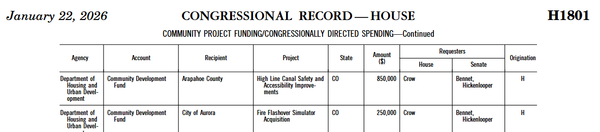
Say Congress earmarks money for a bridge in a specific town (see last week). The appropriation is settled — a purpose, a clock, an amount, a named recipient. One question remains, and it changes almost everything downstream: how does the money actually get to them?
Does the government hire a company to build the bridge? Hand the town a grant to build it themselves? Partner with the state and stay involved throughout? Or lend the money and expect it back? Each of those is a different award vehicle, and the vehicle determines which rulebook applies, what strings attach, who's accountable for what, and — for anyone following the money — where you go to find it. Pick the wrong vehicle and you've broken the law before the first shovel moves.
The 60-Second Version
| Vehicle | The government is… | Governing rules | The tell in the bill |
|---|---|---|---|
| Procurement contract | buying something for its own use or benefit | the FAR (48 CFR) | "For necessary expenses of…" |
| Grant | helping a recipient do a public purpose, hands-off | Uniform Guidance (2 CFR 200) | "for grants for…" |
| Cooperative agreement | helping a recipient, but substantially involved | Uniform Guidance (2 CFR 200) | "for cooperative agreements" |
| Direct loan / loan guarantee | lending, or backing someone else's loan | Federal Credit Reform Act | "for the cost of direct loans and loan guarantees" |
Key insight: There are really only three things the government can be doing when it sends money out the door — buying (acquisition), helping (assistance), or lending (credit). Every award instrument is one of those three. Get that top-level sort right and the rest is detail.
Pro Tip: There's one more big bucket that the government spends money on that doesn't fall into these three categories — salaries for the Federal workforce. A write up of all of the ins and outs on the workforce is outside of the scope of this post, but like contracts, grants, cooperative agreements, and loans, there's an extensive body of law and regulation on that aspect of federal spending as well.
The One Question That Sorts Them: Acquisition vs. Assistance
Start with a real appropriation — the Office of the National Coordinator for Health Information Technology, from the Labor-HHS division of the 2026 act (Division B of P.L. 119-75):
Highlight legend: blue = the vehicles authorized · pink = purpose · gold = the amount
One account, one $69 million pot, and a single clause authorizing three different vehicles — grants, contracts, and cooperative agreements — all for the same purpose. The bill doesn't say which projects get which; it hands the agency the toolbox and trusts it to pick the right tool for each job. One of the three (contracts) is acquisition; two (grants and cooperative agreements) are assistance. So how does the agency choose?
The dividing line that matters most isn't a matter of style — it's statutory. The Federal Grant and Cooperative Agreement Act (31 U.S.C. §§ 6301–6308) tells agencies which instrument to use, and it turns on a single question: who is the money principally for?
Highlight legend: pink = the principal-purpose test · coral = the substantial-involvement hinge
Read it as two forks:
- Fork one — acquisition or assistance? If the principal purpose is to acquire property or services for the government's own use or benefit, it's a procurement contract, and you're in the world of the Federal Acquisition Regulation. If the principal purpose is to transfer value to a recipient to carry out a public purpose — support or stimulation authorized by law — it's financial assistance.
- Fork two — grant or cooperative agreement? Within assistance, one thing decides it: substantial involvement. If the agency expects to be substantially involved in carrying out the activity — hands on the wheel, approving steps, working alongside the recipient — it's a cooperative agreement. If not — the agency writes the check and monitors from a distance — it's a grant.
Translation: "Are we buying this for us, or helping them do it?" is the first question, and it decides the rulebook — the FAR for acquisition, the Uniform Guidance (2 CFR 200) for assistance. "Are we going to be in the room?" is the second, and it splits assistance into cooperative agreements (yes) and grants (no).
Pro Tip: The distinction isn't optional, and agencies don't always get it right. Calling something a "grant" or a "cooperative agreement" to escape the FAR's competition rules — when you're really buying services for your own use — is a classic misuse. The instrument has to match the substance, not the convenience.
The Third Family: Credit
Buying and helping both move money out. Credit is different: the government either lends its own money and expects it back, or promises to cover someone else's lender if a borrower defaults.
- Direct loan — the government is the lender. Cash goes out; repayment (with interest) is expected to come back.
- Loan guarantee — the government is the backstop. A private lender makes the loan; the government promises to pay if the borrower defaults. No cash leaves unless and until something goes wrong.
Here's what makes credit its own world — and the single most important thing to understand about it. Under the Federal Credit Reform Act of 1990, the budget does not record the face value of the loans. It records the government's estimated long-run cost — the "subsidy cost," the net present value of expected losses and flows. So a credit appropriation splits into two numbers — and often two separate paragraphs. Here's USDA's Rural Business Program Account, from the FY2026 Agriculture appropriations (Division A of P.L. 119-37):
Highlight legend: green = the loan level (principal the program can put on the street) · coral = the credit "cost of" tell · gold = the subsidy appropriation (what it costs the taxpayer)
Read the two paragraphs. The first sets the loan level — up to $1,750,000,000 in guaranteed loan principal the program may put on the street. The second appropriates the cost of that lending — $50,575,000 — the subsidy the taxpayer actually funds. One program, two very different numbers: a roughly $50 million appropriation standing up $1.75 billion in loans, about 35 times its size. (The same account funds grants right alongside the guarantees, and it's no-year — "to remain available until expended.")
Key insight: For credit, the amount fence has two numbers, and you need both. The subsidy appropriation is what it costs the taxpayer; the loan-level limitation is how much money actually moves. Report only the first and you've wildly understated the program; report only the second and you've wildly overstated the cost. (We met a real one back in Part 1 — the Defense Strategic Capital Credit Program, "including loans, loan guarantees, and technical assistance." Now you know why it reads the way it does.)
Pro Tip: I said it before when we covered the budget release and I'll say it again now, the Federal Credit Supplement is invaluable if you're interested in the government's credit programs. That document shows you the estimated subsidy rates for the upcoming year, the composition of that subsidy, default rates, loan sizes and volumes and a lookback at prior years.
How to Tell, and Where to Look
You can usually spot the vehicle from the appropriation language itself. "For necessary expenses of" an operating account funds contracts and salaries — acquisition. "For grants for" names assistance. "For the cost of direct loans and loan guarantees" is the unmistakable credit tell (that "cost of" is Federal Credit Reform Act language). The words tell you which rulebook the money is about to enter.
And the vehicle tells you where to track it once it's out the door:
- Contracts are competed and reported through the acquisition system and show up as procurement awards.
- Grants and cooperative agreements are financial-assistance awards, identified by program in the government's assistance catalog (the Assistance Listings, formerly CFDA numbers).
- Loans and guarantees appear as assistance too, but remember the two-number problem — the record has to distinguish subsidy cost from face value.
All of them surface in one public place, which is exactly where we're headed next.
Why It Matters
The vehicle is not paperwork; it's the whole relationship. A contractor works for the government under the FAR, with its competition requirements and its remedies. A grantee works toward a public purpose under the Uniform Guidance, with a completely different set of cost principles and audit rules. A borrower owes the money back. Each vehicle carries its own strings, its own oversight regime, and its own failure modes — and the choice is legally constrained, not a preference.
For following the money, the vehicle is the first thing you want to know, because it tells you what questions even make sense. You don't ask a grantee about profit margins or a contractor about matching funds. And credit is where the biggest gap between cost and reach hides — a modest appropriation quietly backing billions in lending. If you only read the budget-authority number, you miss the program.
Wrapping Up
Same earmarked dollar, four ways out the door: buy it, grant it, partner on it, or lend it. The three fences from earlier in the series still govern every one of them — the money is still bound by its time, purpose, and amount — but the vehicle decides how it travels the last mile and what rules ride along. Learn to spot the vehicle in the bill language, and you already know most of what happens next.
Which raises the obvious question: once all this money is out the door, through all these instruments, where does the public actually get to see it?
What's Next
A quick programming note: we're taking September off. Over this series you learned to read how a federal dollar is fenced and moved — its time, its purpose, its amount, tightened into an earmark, carried out the door by a vehicle. We're spending the month heads-down finishing the thing that lets you actually watch all of it happen. Back in early October, following the same money.
Keep following the money.
We do this every week. Necessary Expenses goes out Friday afternoons: the week's CFR redlines, executive actions, notable grants, and what we flagged. Free, and that's the whole arrangement.
Not keen on another newsletter? Our public archive of fiscal data is at: data.blazingstaranalytics.com.