How to Read Reconciliation Instructions
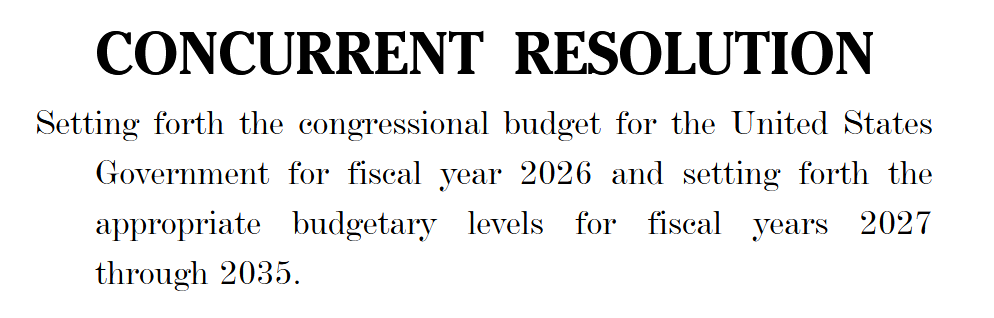
The budget resolution we covered in Part 1 wasn't just a fiscal plan. If it included reconciliation instructions, it was also marching orders — directing specific committees to produce specific legislation by specific deadlines. Here's how to read those orders.
In Part 1, we covered the budget resolution — what it is, what it contains, and how it sets the fiscal playing field. In Part 2, we covered reconciliation — the fast-track process that lets Congress move major spending and tax legislation with a simple Senate majority.
Now we get practical. Reconciliation doesn't just happen. It starts with instructions — specific provisions in the budget resolution that tell committees what they have to do, how much they have to do it by, and when it has to be done.
If you can read reconciliation instructions, you can predict what's coming. The instructions tell you which parts of law are in play, who the key committee players are, and how big the bill is likely to be. Every major reconciliation fight in the last 45 years started with a set of instructions you could have read months in advance.
The 60-Second Version
| Question | Answer |
|---|---|
| What are they? | Directives in the budget resolution ordering specific committees to report legislation |
| Where are they? | Usually in their own title of the resolution (Title II or Title III is common) |
| What do they say? | Which committee, what kind of change, by how much, and by when |
| What do they control? | Dollar targets and jurisdiction — not specific policies |
| Who assembles the final bill? | The Budget Committee — but only as a stapler, not an editor |
| What if a committee doesn't comply? | The Budget Committee Chair has limited authority to substitute recommendations |
Key insight: Reconciliation instructions are financial targets with jurisdictional boundaries. They tell committees how much to change (in dollars) and within what jurisdiction (which laws they can touch), but they don't tell committees exactly what policies to pursue. That discretion is where the real action happens.
What a Reconciliation Instruction Looks Like
A reconciliation instruction has four essential components:
- The committee — which committee is instructed
- The action — what the committee must do (submit or report changes in law)
- The target — the dollar amount and budgetary effect required
- The deadline — when the committee must report
Here's the typical structure of a reconciliation instruction:
The Committee on [jurisdiction] of the [House/Senate] shall submit changes in laws within its jurisdiction to [reduce the deficit / increase the deficit / increase revenues / reduce revenues] by not [less/more] than $[amount] for the period of fiscal years [Y1] through [Y2].
That's the skeleton. Every reconciliation instruction is some version of this sentence.
Here's an example of the reconciliation instructions from the recent Senate-passed budget resolution:
TITLE II—RECONCILIATION
SEC. 2001. RECONCILIATION IN THE HOUSE OF REPRESENTATIVES.
(a) Submissions.—In the House of Representatives, not later than May 15, 2026, the committees named in subsection (b) shall submit their recommendations on changes in laws within their jurisdictions to the Committee on the Budget of the House of Representatives to carry out this section.
(b) Instructions.—
(1) Committee on Homeland Security.—The Committee on Homeland Security shall submit changes in laws within its jurisdiction that increase the deficit by not more than $70,000,000,000 for the period of fiscal years 2026 through 2035.
(2) Committee on the Judiciary.—The Committee on the Judiciary shall submit changes in laws within its jurisdiction that increase the deficit by not more than $70,000,000,000 for the period of fiscal years 2026 through 2035.
Sec. 2002 covers Reconciliation in the Senate. It instructs the Committee on Homeland Security and Governmental Affairs and the Committee on the Judiciary with the same amounts and deadlines.
Pro Tip: In a lot of ways, this resolution is a bad example to learn from. Over the broad arc of history, reconciliation has typically contained mixed instructions. Here's an example from last year's budget resolution:
(1) Committee on Agriculture.—The Committee on Agriculture shall submit changes in laws within its jurisdiction to reduce the deficit by not less than $230,000,000,000 for the period of fiscal years 2025 through 2034.
(2) Committee on Armed Services.—The Committee on Armed Services shall submit changes in laws within its jurisdiction that increase the deficit by not more than $100,000,000,000 for the period of fiscal years 2025 through 2034.
(3) Committee on Education and Workforce.—The Committee on Education and Workforce shall submit changes in laws within its jurisdiction to reduce the deficit by not less than $330,000,000,000 for the period of fiscal years 2025 through 2034.
(4) Committee on Energy and Commerce.—The Committee on Energy and Commerce shall submit changes in laws within its jurisdiction to reduce the deficit by not less than $880,000,000,000 for the period of fiscal years 2025 through 2034.
(5) Committee on Financial Services.—The Committee on Financial Services shall submit changes in laws within its jurisdiction to reduce the deficit by not less than $1,000,000,000 for the period of fiscal years 2025 through 2034.
(6) Committee on Homeland Security.—The Committee on Homeland Security shall submit changes in laws within its jurisdiction that increase the deficit by not more than $90,000,000,000 for the period of fiscal years 2025 through 2034.
Agriculture, Ed & Workforce, E&C, Financial Services are all instructed to reduce the deficit. Armed Services and Homeland Security are all instructed to increase the deficit.
Let's walk through each piece.
Reading the Four Components
1. The Committee
Every instruction names a specific committee. Reconciliation instructions go to the authorizing committees (the ones with jurisdiction over mandatory spending programs and tax law), not to the Appropriations Committees (which handle discretionary spending). Common recipients include:
| Committee (House / Senate) | Jurisdiction |
|---|---|
| Ways and Means / Finance | Tax, Social Security, Medicare, trade |
| Energy and Commerce / Finance | Health programs, including Medicaid |
| Agriculture / Agriculture | Farm programs, SNAP |
| Education and Workforce / HELP | Student loans, some education funding |
| Natural Resources / ENR | Public lands, mineral leasing |
| Judiciary / Judiciary | Immigration fees, court fees |
| Homeland Security / HSGAC | Some DHS fee authorities |
Translation: If a committee isn't named in the instructions, it's not in the reconciliation bill. Full stop. If you care about a policy area, look at the committee list first.
The Example: In our example, two committees in each chamber are named:
- Committee on Homeland Security (House) & Committee on Homeland Security and Governmental Affairs (Senate)
- The Committees on the Judiciary in both chambers.
2. The Action
The standard language is "shall submit changes in laws within its jurisdiction." Every word matters.
- "Shall" — mandatory. The committee is required to produce a recommendation. It's not optional.
- "Submit" — in the House, committees submit to the Budget Committee; in the Senate, committees report to the Budget Committee.
- "Changes in laws" — the committee is modifying existing law, not creating new programs from scratch (though the net effect can be creating new programs).
- "Within its jurisdiction" — the committee can only touch laws it has jurisdiction over. This is a hard constraint.
Translation: A committee can't use reconciliation to legislate on something outside its jurisdiction. That's one of the reasons major reconciliation bills have multiple committees instructed — they need different committees for different pieces of the bill.
The Example: In our example, each committee receives the same charge:
shall report changes in laws within its jurisdiction
3. The Target
This is the number everyone watches. It's usually expressed in one of four forms:
- "Reduce the deficit by not less than $[X]" — the committee must produce at least $X in deficit reduction (through spending cuts, revenue increases, or both).
- "Increase the deficit by not more than $[X]" — the committee can produce up to $X in new spending or tax cuts, but no more.
- "Increase revenues by not less than $[X]" — specifically about revenue (tax) increases.
- "Reduce revenues by not more than $[X]" — specifically about revenue (tax) decreases, i.e., tax cuts.
The target is a floor or a ceiling, not a precise number. "Not less than" means the committee has to hit at least that number and can exceed it. "Not more than" means the committee has to stay at or below that number.
Key insight: The targets are in billions of dollars, but they're not appropriations. They're targets for the fiscal effect of the legislation the committee produces. If the Finance Committee is instructed to reduce the deficit by $1 trillion over 10 years, that means the CBO score of the committee's product has to show at least $1 trillion in deficit reduction — not that the committee has $1 trillion to spend.
The Example: In our example, the same direction is given to each committee:
increase the deficit by not more than $70,000,000,000 for the period of fiscal years 2026 through 2035.
Pro Tip: Adding the numbers together doesn't necessarily tell you how big the bill is going to be. In this example, both Homeland and Judiciary have split jurisdiction over DHS and immigration. By giving both committees the same amount, $70 billion, it preserves flexibility to figure out the actual allocation between the two subcommittees. I think the final number will end up closer to $70 billion than $140 billion.
4. The Deadline
Every instruction includes a deadline — usually a specific date, sometimes a specific number of days after the resolution is adopted. Common deadlines are a few weeks to a few months after adoption of the resolution.
The deadline is enforceable in theory. In practice, committees that miss their deadlines face procedural consequences but the bill still moves. We'll cover those consequences below.
The Example: In our example, each committee has the same deadline:
not later than May 15, 2026, the committees named in subsection (b) shall submit their recommendations
The Discretion Inside the Target
Here's the most important thing to understand about reconciliation instructions: they don't tell the committee what specific policies to pursue. They set a target. The committee decides how to hit it.
If the Agriculture Committee is instructed to "reduce the deficit by not less than $230 billion over 10 years within its jurisdiction," it doesn't have to cut SNAP. It could. It could also cut farm programs. It could reduce federal crop insurance. It could do some combination. The instruction doesn't say.
This discretion is where the real fights happen. The budget resolution sets the target. The committee markup — and the deals cut within the majority party — determine which specific programs bear the cut.
Translation: Reading the instructions tells you the scope and scale. It doesn't tell you the policy. For that, you have to watch the committee.
How Committees Produce Their Titles
Once the budget resolution is adopted with reconciliation instructions, each instructed committee begins drafting its piece. That piece is called a "title" — a section of what will become the final reconciliation bill.
Each committee:
- Drafts legislative text within its jurisdiction that meets the dollar target
- Holds markups to consider amendments and approve the title
- Submits the title to the Budget Committee by the deadline in the instructions
This happens in parallel across all instructed committees. Ways and Means is drafting its title at the same time Energy and Commerce is drafting its, at the same time Agriculture is drafting its, and so on.
Each committee operates independently within its jurisdiction. There's coordination among majority staff, of course, but there's no single drafting shop.
The Budget Committee as Stapler
Here's a misconception worth correcting: the Budget Committee does not write the reconciliation bill. It assembles it.
When committees submit their titles, the Budget Committee staples them together — title by title, committee by committee — and reports the combined product to the floor. That combined product becomes the reconciliation bill.
The Budget Committee's job is:
- Receive the titles from the instructed committees
- Assemble them into a single bill
- Report the bill to the House or Senate floor
The Budget Committee's job is not:
- Rewriting what committees submitted
- Editing policy choices
- Adding provisions outside what committees submitted
- Removing provisions a committee included (with limited exceptions)
This is one of the structural reasons reconciliation bills can be so sprawling and uneven. Each title reflects a different committee's choices, and the Budget Committee lacks the authority to impose a coherent policy vision across the whole bill.
Translation: The Budget Committee is the stapler, not the editor. If you want to understand why a reconciliation bill looks the way it does, look at what each committee submitted — not at what the Budget Committee did with it.
Pro Tip: You'll note that I haven't mentioned the chamber leadership at all. In this "Schoolhouse Rock" version of things, they're just sitting in their fancy offices in the Capitol, watching the process unfold. I assure you that's not the case. They're actively working with committee leadership throughout this process and most closely working with the leadership of the budget committee to ensure that the bill conforms to both the technical requirements and policy goals. These are technically difficult bills.
What Happens If a Committee Misses Its Target or Deadline
Section 310(c) of the Budget Act provides a limited remedy: if an instructed committee fails to submit recommendations or fails to meet its target, the Budget Committee Chair can, in some cases, report recommendations on that committee's behalf to meet the target.
In practice, this is rarely invoked. Committees almost always submit something by the deadline, even if the something is controversial. The threat of the Budget Committee Chair substituting recommendations creates pressure to comply.
What happens more often is that a committee submits a title that technically meets its target but includes provisions that are politically difficult — daring the majority leadership to accept the title as-is or force changes through amendments on the floor.
Translation: The formal enforcement mechanism exists, but the real enforcement is political. Committees that miss their targets create problems for their own party's leadership, and that's the actual pressure that keeps committees moving.
Overlapping Jurisdiction
Sometimes multiple committees have jurisdiction over the same area of law. Student loans are a classic example: the Education and Workforce Committee in the House and the HELP Committee in the Senate handle most student loan policy, but the Ways and Means / Finance Committees handle anything with tax implications.
When reconciliation instructions cover areas with overlapping jurisdiction, the instructions typically allocate clear targets to each committee — giving Education and Workforce one target for loan program changes, for example, and giving Ways and Means a different target for tax-related provisions.
The majority party's leadership coordinates behind the scenes to avoid conflicts. When conflicts do arise, they typically get worked out in the markup process or through side deals before the Budget Committee assembles the final bill.
Fun fact: If you read a budget resolution cover-to-cover, you'll find sections titled things like "Deficit-Neutral Reserve Fund for something." These are not reconciliation instructions — they're a different animal entirely. A deficit-neutral reserve fund is a placeholder that authorizes the Budget Committee Chair to revise the spending allocations in the resolution if legislation addressing that policy area is later introduced and is projected to be deficit-neutral (meaning any new spending is offset by new revenue or other savings). They're essentially a pre-authorization: "if this policy comes up later and it's paid for, we'll adjust the numbers to accommodate it." They don't instruct anyone to do anything. They don't have the force of reconciliation. They're often aspirational — listed to signal priorities without committing anyone to producing a bill. If you see a resolution packed with reserve funds but thin on reconciliation instructions, you're looking at a resolution that's more about messaging than legislating.
Why Should You Care?
"I just want to know what's going to be in the bill."
Read the instructions. The instructions tell you which committees are in play, which means they tell you which areas of law are in play. A committee that isn't instructed cannot contribute to the bill. If Education and Workforce isn't instructed, student loans aren't on the table.
"How do I know what specific policies will end up in the bill?"
Watch the committee markups. The instructions set the target; the committee decides how to hit it. The markup is where the real policy choices happen.
"When should I start paying attention?"
When the budget resolution is first introduced. The instructions are usually visible in the resolution or in the Chairman's mark before the resolution is even adopted. Don't wait for the bill — by the time the bill is introduced, the committee markups have already happened.
The Bottom Line
Key takeaways:
- Reconciliation instructions are directives in the budget resolution ordering specific committees to report legislation with specific fiscal effects by specific deadlines
- Every instruction has four parts: committee, action, target, deadline
- Instructions set dollar targets within jurisdictions — they don't dictate specific policies
- Committees produce titles; the Budget Committee staples them together without rewriting
- If a committee misses its target, the Budget Committee Chair has limited substitute authority — but real enforcement is political
- If you want to predict what's in a reconciliation bill, read the instructions first
What's Next
In Part 4, we'll cover how to read the resulting reconciliation bill — the structure of the final product, how to trace each committee's title back to its instruction, how the Byrd Rule shapes what survives to the final text, and how the whole thing moves on the Senate floor. We'll use an enacted reconciliation bill as the worked example so you can see the full arc from instruction to enactment.
BlazingStar Analytics is building real-time budget execution tracking that connects appropriations, apportionments, and SF-133 reports. Get early access to our platform, launching later in 2026.