Let Facts Be Submitted to a Candid World

We tend to remember the Fourth as a shout — the bells, the fireworks, the one line everybody can quote about life, liberty, and the pursuit of happiness. Fitting, in a way. Fireworks are loud, brief, and leave nothing to read the next morning.
We keep one rowdy image, too: a Boston harbor at night, a mob, crates of tea going over the side. It was an emotional, messy explosion of anger. But look at what actually sparked the fuse. It wasn't a dislike of tea; it was a profound rejection of being taxed by a government they had no voice in. The tyranny and oppression by the Crown manifested itself in myriad ways, but I want to focus on this one — it was a fight over who controls the public purse and who gets a say in how it's filled. One of the most defining acts of defiance in American history was, at its root, an unyielding argument about the management of the public fisc. The money was the mechanism of power.
And the founding act itself wasn't the shout. It was the paperwork.
Read the Declaration again, past the part that goes on the mug. Most of it is a list. Twenty-some grievances, itemized, one after another — a bill of particulars against a king. "He has refused his Assent to Laws… He has forbidden his Governors… He has obstructed the Administration of Justice." And right before the list, the sentence that tells you what kind of document you're actually holding:
To prove this, let Facts be submitted to a candid world.
Prove. Facts. Submitted. That's not a war cry. That's a citizen showing his work — laying the evidence out in the open and inviting the world to check it. The most radical thing the founders did on July 4th was refuse to be taken at their word, and refuse to ask you to take them at theirs. They were making a political case, yes, but they chose to make it by filing a ledger of grievances.
The thing they built next was the same move, at a larger scale — though they had to fail first to get there. The opening attempt, the Articles of Confederation, didn't hold: a central government too weak to tax, too weak to pay its debts, too weak to keep thirteen restless states pulling the same direction. By the mid-1780s our first American experiment was coming apart in plain view — debt-ridden farmers in armed revolt, states levying tariffs on one another like foreign countries.
They could have patched it by instinct and hoped. Instead they did the homework. Checks and balances, three branches, a republic that answers to the governed — none of that arrived by pure inspiration. It was researched. In the summer before Philadelphia, Madison worked through the history of every confederation he could get his hands on — the Greek leagues, the Swiss, the Dutch — cataloguing exactly how each one had failed, and why. He walked into the Convention with the receipts. The other founders did their work too.
The system they engineered was brilliant, but it was built by flawed men making messy, sometimes compromised choices. Yet they built it to be inspected. They had studied what broke the other models, and they built to spec against failure. Then they argued the whole design out in public — eighty-five essays' worth — so anyone could follow the logic and push back.
That is the part I'd set off fireworks for. Not the slogan. The rigor. A handful of people took self-government seriously enough to treat it as an engineering problem worth doing the homework on, in the open, with the receipts attached.
The founders were doing more than filing grievances, of course — underneath the list was a principle. Lincoln, decades later, gave it its most memorable name. In a private note never published in his lifetime, scratched out as the country was coming apart, he reached for what was actually worth saving: the Declaration's principle of "liberty to all" was the apple of gold; the Union and the Constitution, the picture of silver framed around it.
The picture was made not to conceal or destroy the apple, but to adorn, and preserve it. The picture was made for the apple—not the apple for the picture.
The frame serves the principle, not the other way around. And then the line that could be the epigraph for this whole enterprise:
So let us act, that neither picture or apple shall ever be blurred or bruised or broken. That we may so act, we must study, and understand the points of danger.
We must study. Madison studied the confederacies; Lincoln studied the Union as the ground gave way beneath it; the assignment comes down to us unchanged. You cannot protect what you won't take the trouble to understand.
And here's why I keep saying this project isn't a partisan one: the homework doesn't take sides. A ledger is just as legible to whoever's out of power as to whoever's in it. Checking the government's math is a founding act, not a factional one — it was designed to serve the citizen regardless of which faction holds the gavel or the whiteboard that year. Reading the record is about as American as it gets, and it stays American no matter who's signing the appropriations bills.
Strip self-government down to its machinery and this is what's left: a community of equals deciding, together, what to spend their shared resources on — and calling the sum of those choices the common good. That's most of what governing actually is — corralling resources toward the things a people has decided are worth doing together. And money is the most transformable resource there is. It turns into roads, courts, a research grant, a carrier at sea, a check to someone who can't work anymore. The money — and the activity it buys — is very nearly the project of self-government itself. That makes the ledger something more than bookkeeping. It's the record of what we decided to be, together, that year. The record has never been more available, or less read. Seven trillion dollars, a search bar away — and it loses, every day, to the group chat.
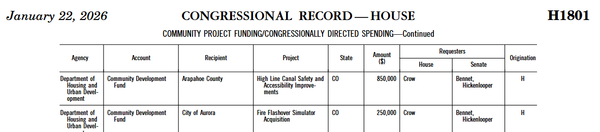
Which is the whole idea behind what we do. We assemble the public record of federal spending in one place, with its provenance attached, so an ordinary person can do what the founders did: submit the facts to a candid world and check them for themselves. It's the same instinct, two and a half centuries later. Prove it. Show the facts. Let people look.
I love this country. Not because I think it's finished, and not because I've missed the ways it has failed — it enslaved people, drove Native nations off their land, kept the vote from women for the better part of its history. The same machinery that can build a republic can be turned on the people inside it: Japanese American families interned by executive order; thousands of federal workers, during the Lavender Scare, hounded out of their careers for being gay. The machinery of state is a powerful instrument, and a powerful instrument can be pointed at people.
But point that same machinery at something worth building, and look what a free people can do. We put twelve people on the moon and brought them home. We strung a highway system across a continent, and — starting from a handful of government-funded computers wired together, back when the network's address book was still a federal responsibility — plumbed the internet you're reading this on. We drove malaria out of the American South — which is why the CDC sits in Atlanta and not Washington — and turned the outfit that did it into the one the world calls when something new starts to spread. We flung a constellation of atomic clocks into orbit and handed the whole planet a free, exact answer to where am I — the signal your phone, your bank, and every truck on that interstate now run on without a second thought.
None of it was magic, and none of it was private genius alone. It was public money, appropriated in the open and pointed at a common purpose — the plain, staggering power of a people deciding together that something is worth doing, and then doing it. Every one of those wonders has a paper trail. You can look up what it cost. That isn't a footnote to the achievement; it's part of it.
The fireworks are swept up, the leftovers are in the fridge, and the workweek is about to begin. Which is about right — the noise was never the point. Let's go do a little homework, America! I can't wait to see what we'll accomplish next.
— Joe
Keep following the money.
We do this every week. Necessary Expenses goes out Friday afternoons: the week's CFR redlines, executive actions, notable grants, and what we flagged. Free, and that's the whole arrangement.
Not keen on another newsletter? Our public archive of fiscal data is at: data.blazingstaranalytics.com.